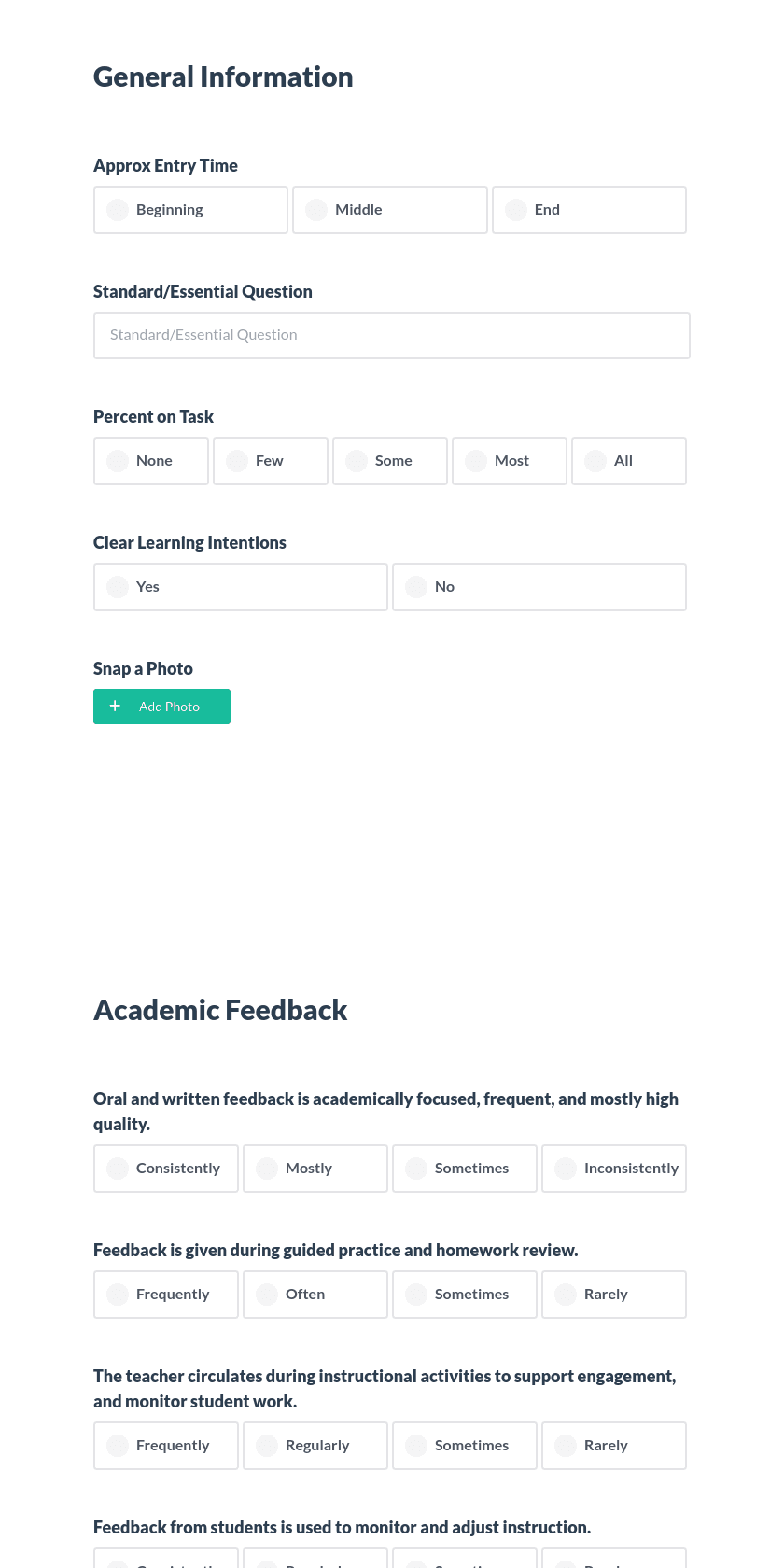
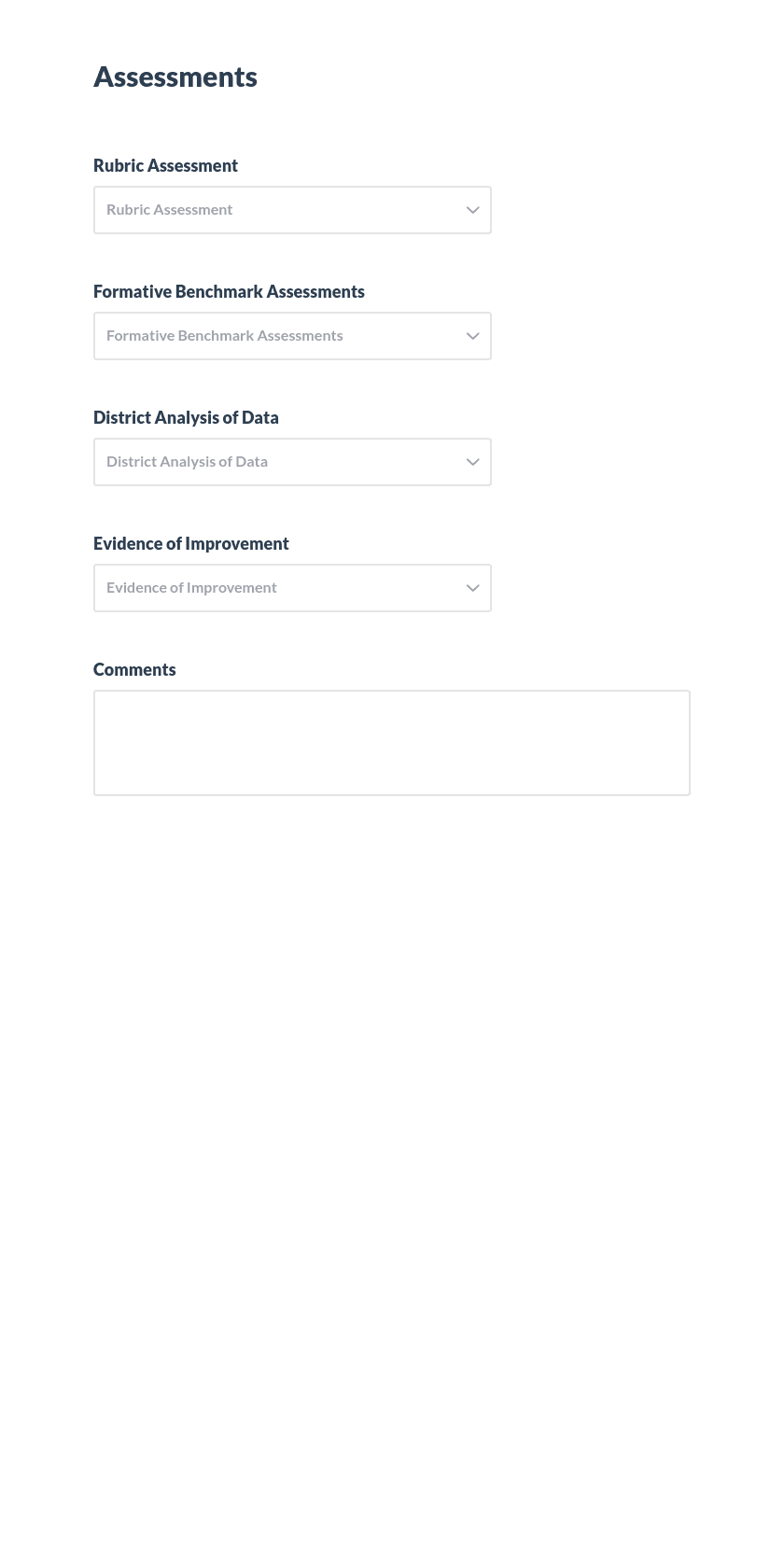
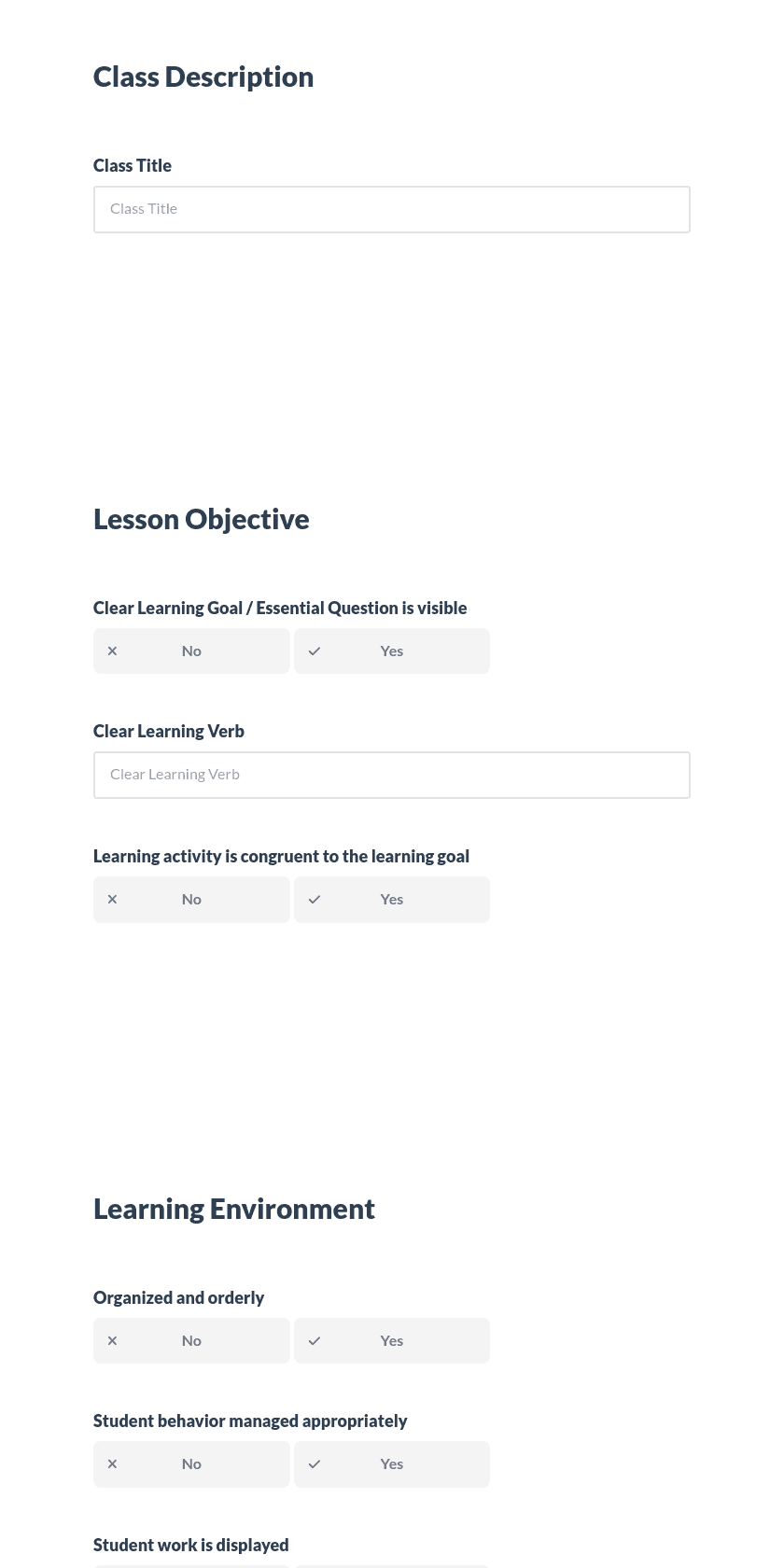
The teacher observation form is a tool used by instructional leaders to assess and evaluate various aspects of a teacher's performance in the classroom. It covers a range of topics including reading, math, instructional strategies, rigor, relevance, classroom structure, student engagement, integrating technology, classroom environment, classroom management, teacher position in the classroom, instructional feedback, assessment, and closing information. The form includes specific questions related to phonemic awareness, alphabetic principle, fluency with text, vocabulary, comprehension, evidence of interactive writing, real-life problem-solving, balanced instruction, multiple methods for skills practice, emphasis on communication, direct instruction, interactive instruction, indirect instruction, experimental instruction, learning centers, scaffolded instruction, literacy instruction, numeracy instruction, modalities, remembering, understanding, applying, analyzing, evaluating, creating, knowledge in subject area, cross-curricular connections, connects to student experiences, real-world applications, whole class, individual, small group, cooperative learning, interactive pairs/trios, creating authentic, completing projects, integrating technology, discussion, presentations, listening/responding, note-taking, interactive learning, guided practice/problem-solving, worksheets, desktop computers, laptops, SMARTboard, SMART Response, iPods, iPads, Nooks, and Moodle. The form is designed to provide a comprehensive evaluation of a teacher's performance and help instructional leaders identify areas for improvement and provide feedback to support growth and development.
Sections:
5 Big Ideas of Reading
Everyday Math
Instructional Strategies
Rigor
Relevance
Classroom Structure
Student Engagement
Integrating Technology
Classroom Environment
Classroom Management
Teacher Position in Classroom
Instructional Feedback
Assessment
Closing Info